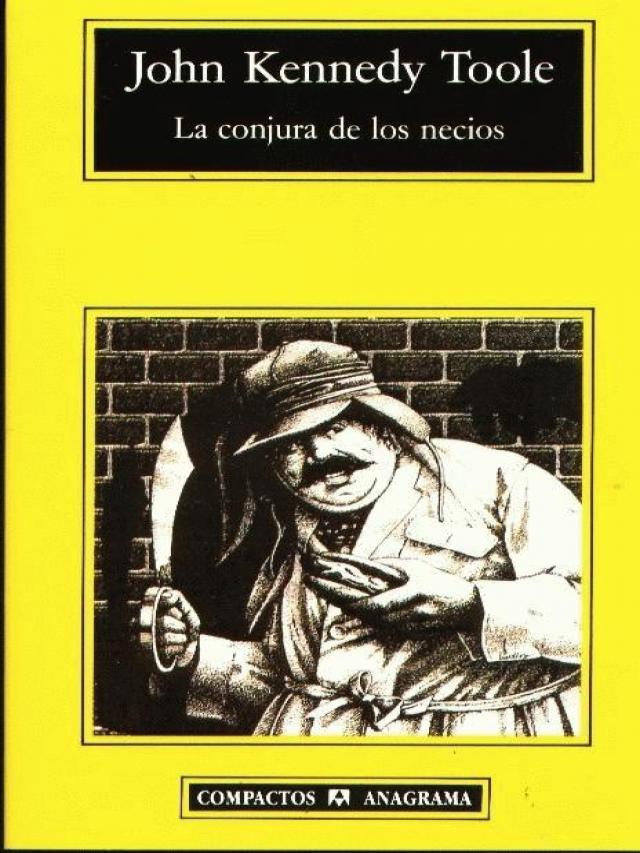
Leo en algún lado que Isabel Coixet recomienda leer y releer la Conjura de los Necios de John Kennedy Toole (1937-1969) por considerarla una gran novela. Yo no estoy de acuerdo con ella ni siento ningún aprecio especial por el autor, que se suicidó a partes iguales por sus represiones erótico-sentimentales y la depresión causada al ver rechazada su obra en la primera editorial a la que la envió (un escritor debe tener como principal rasgo de carácter una confianza suicida en sí mismo y una resistencia prácticamente preternatural al rechazo y la indiferencia generalizada). No diré que sea una mala novela y hasta animo a leerla, pero no se encuentra entre mis favoritas y no la considero en modo alguno una referencia.
Sin embargo, y esta es la parte que quiero contar y sobre la que deseo reflexionar, yo tengo una historia personal con este libro que narraré, al precio de desvelar asuntos íntimos, en esta entrada. Al hacerlo quiero poner de manifiesto precisamente eso: como los libros entran y salen de nuestras vidas, a menudo, más que por sus méritos o los de sus autores, por el azar de nuestro entorno social y en virtud del mismo y de nuestro devenir personal o sentimental adquieren un significado u otro.
Anticiparé que mi ejemplar de La Conjura de los Necios acabó en la basura, junto con otros ejemplares de otros títulos.
¿El motivo? Hace algunos años me lo regaló una mujer a la que entonces tenía en alta estima y que ahora, que la conozco mejor, desprecio profundamente. Me da asco, incluso, y he llegado a comprender que sus propios padres la repudiaran en su juventud a causa de su bajeza moral. No entraré en detalles.
El caso es que alguien le regaló un ejemplar de librería de viejo de la novela susodicha, lo leyó, le gustó y respondió al regalo que le hice de una edición nueva de Campos de Castilla de Machado con ese mismo ejemplar de portada amarilla. Tuve que leerlo y fingir, por educación, que había sido un gran descubrimiento.
Pasaron los años, fui conociéndola mejor, y el verano pasado acabé de comprender toda su iniquidad moral y su indigencia intelectual. Perdí todo interés (mantuve, no lo negaré, durante algún tiempo un cierto apego erótico, pero este se esfumó también) y terminamos como el rosario de la aurora.
Asqueado de ella y lleno de furia (ahora ya casi ni recuerdo su nombre) acabé tirando todos sus regalos (que no eran pocos, y, de estos, unos cuantos libros) a la basura. Ella, intuyo, fue más práctica y, siguiendo las enseñanzas de Shakira (las mujeres no lloran, las mujeres facturan), vendió los míos (incluso los dedicados por mi) en Wallapop o plataformas similares. Así acaban las vinculaciones sustentadas en las falsas apariencias de determinadas empusas y de este modo los libros, como objetos, pero también como obras, pasan por nuestras vidas vinculados al azar y las historias que vivimos.
De todos modos, ya que he comenzado citando a una Isabel, acabaré citando a otra: Isabel Aaiún.
Porque yo, a estas alturas, también la perdonaría de mil amores… Después de todo, y aquí asoma Joaquín Sabina, ya no me importa.
© Fernando Busto de la Vega.